
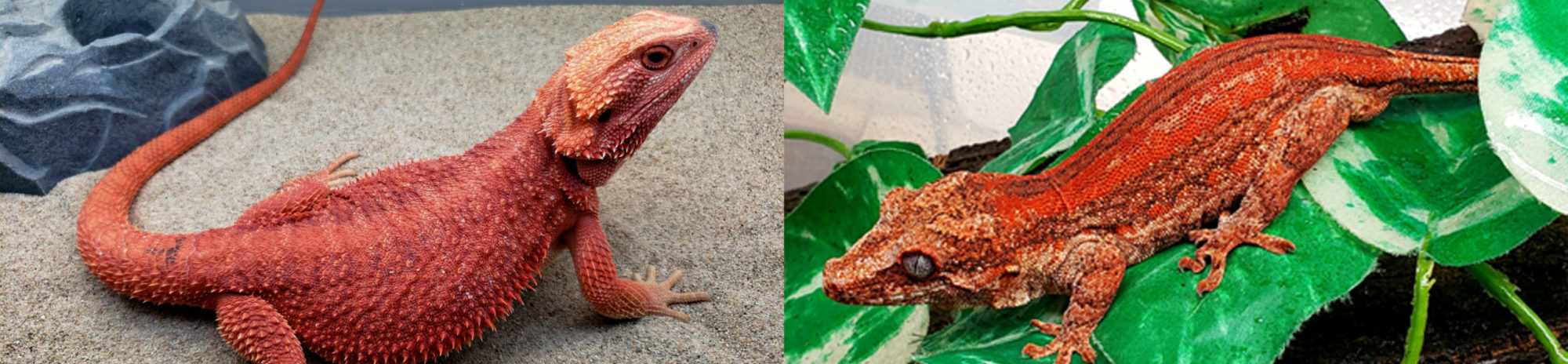
Welcome to Dragon’s Den Herpetoculture!
Our 2026 Breeding Season is in Full Swing! We have some exceptionally colored juveniles and sub-adults available now. Please check the Featured Bearded Dragons section for newly posted dragons. If you would like to receive advance notification, send us an email to ddenherp@gmail.com and tell us what you are interested in!
Available dragons are updated daily, and often sell the same day as listed. If you are interested in purchasing a specific dragon, call right away (760 277 8570) while it is still available! If you don’t see any available dragons, that means we are waiting for them to shed before posting!
Dragon’s Den Herpetoculture was started in 1993, in Santa Barbara, Ca., as a home-operated business. In 1998 we relocated to the Los Angeles area and in 2006 we moved again to our current location, in San Diego County, CA.
Over the last 31 years we have had the opportunity to work with some of the World’s most fascinating reptiles and have learned valuable information related to the husbandry and long-term maintenance of the lizards we keep.
We stand behind our reputation, and our support is never-ending. We are happy to offer our customers the knowledge that we have accumulated in over 3 decades of keeping and breeding Bearded Dragons. Not yet a Dragon’s Den customer? That’s OK…we will gladly supply any information needed to help you make the right choices in housing, feeding, breeding, and selecting the perfect dragon for your next pet or breeding project.
Terms and Shipping Information
All orders must be paid in full before animals are shipped. We accept PayPal, Zelle, Debit and Credit Cards. We ship throughout the year to destinations where “next-day” service is available. Our preferred shipment method is UPS Next-Day-Air, or FedEx Priority Overnight. Shipping costs, whether for purchase or return/exchange, are always the responsibility of the customer.
International Orders
We have been shipping internationally since 1994 and we encourage your order. We are experienced exporters and we take great care to insure that all orders are thoughtfully packaged according to weather and destination. There are no C.I.T.E.S. documents or special permits required to export any of the animals produced at Dragon’s Den Herpetoculture, however, rules regarding the importation of animals vary from country to country. Please be familiar with your local laws.
Guarantee
You must notify us within 24 hours of receiving your lizards in order to activate the following guarantee: Our animals are guaranteed to be honestly represented and to arrive in perfect condition or they will be replaced promptly. In addition, we will guarantee their health for 30 days after arrival, provided they are housed under similar conditions to those described in our Bearded Dragon caresheet. You must be home AND answer the door when your package arrives. We cannot be responsible for packages left at your door if you don’t answer. Failure to follow the guidelines offered in the caresheet will void any guarantee. Regarding color: We expect animals from certain bloodlines to look similar in color to their parents, but It is impossible for us to know exactly how an animal will look as it ages. There are many variables involved in determining a lizard’s color, including light, temperature, mood, color of the enclosure, etc. By following our recommendations, your dragon will have the best opportunity to reach it’s optimum color.
